

Piece Of Meat 2019 No Language 720p WEB-DL x264
- Category Movies
- Type HD
- Language Other
- Total size 100.0 MB
- Uploaded By BoogerSan
- Downloads 73
- Last checked 1 month ago
- Date uploaded 1 month ago
- Seeders 8
- Leechers 0

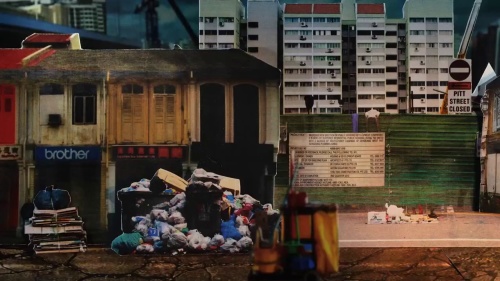
Piece of Meat
Enslaved in a surreal world of living objects, a lamb cutlet does whatever it takes to make ends meet.
Infohash : 92765D301340FF072C8F34483A4B8BD77162D683

Year: 2019
Country: Singapore
Director: Jerrold Chong, Huang Junxiang
IMBD: Link
Language : No Language

In 1947, Winston Churchill famously said that “democracy is the worst form of government except for all those other forms that have been tried from time to time.” Since he wasn’t talking about a democracy based on the organized power and rule of the great majority, perhaps he was correct. He meant what Marxists call bourgeois democracy.
Liberals have always been aligned with Churchill’s endorsement of the ruling-class version of “democracy,” but for more than a hundred years, many in the workers’ movement — including some who falsely claim the Marxist mantle — have insisted that reforming bourgeois democracy can be a way to achieve “socialism.” They are dead wrong, and the main reason is their refusal to acknowledge what genuine Marxism has always taught: all forms of government have a class character. When you look at the bourgeois form of democracy through the class lens, it’s clear that it is no pathway to overcoming the fundamental class antagonisms rooted in the capitalism system. To think otherwise is to fall into a trap.
On January 20, the U.S. government again conducted it ritual of transferring power from one president to another — each successive leader beholden to and serving the interests of capital and its bourgeois regime. Joe Biden has begun his presidency with a promise to restore bourgeois democracy and rebuild faith in its institutions. All manner of people on the Left, viewing democracy in the abstract, have already bought into Biden’s electoral victory as a counterbalance to right-wing “authoritarianism” and even incipient fascism. Like the reformists of old, they too ignore the fundamental class character of bourgeois democracy, which guides every action of those who run the system on which it is based.
The class character of a form of government is precisely why we differentiate bourgeois democracy from genuine rule by the majority that constitutes the working class. By “deceiving the people and concealing from them the bourgeois character of present-day democracy,” wrote Vladimir Lenin in late 1918, those deceivers end up doing the bidding of the ruling class — our class enemy.
In combination, the institutions of bourgeois rule the Biden administration aims to “restore” constitute a bourgeois state that exists as the governmental branch of an overall system that is predicated on capital’s exploitation of the great majority of people, who must sell their labor power to survive. As Friedrich Engels wrote in 1891, “The state is nothing but a machine for the oppression of one class by another, and indeed in the democratic republic no less than in the monarchy.”
We saw this just a few days ago, when police beat striking workers at the Hunts Point produce market in New York City. As if he were writing in 2021, Lenin had suggested, in another 1918 pamphlet, that if we want to understand the true role of a bourgeois democratic state, we should pay attention to “how the most democratic and republican bourgeoisie in America or Switzerland deal with workers on strike.”
Even the laws — indeed, the very concept of the “rule of law” in a bourgeois democracy — puts the lie to what the reformists would have us believe. Biden wants us to trust in those laws, but Lenin’s description of laws in a bourgeois democracy — which fits the United States to a tee — reveals again the trap of not seeing their class character:
Take the fundamental laws of modern states, take their administration, take freedom of assembly, freedom of the press, or “equality of all citizens before the law,” and you will see at every turn evidence of the hypocrisy of bourgeois democracy with which every honest and class-conscious worker is familiar. There is not a single state, however democratic, which has no loopholes or reservations in its constitution guaranteeing the bourgeoisie the possibility of dispatching troops against the workers, of proclaiming martial law, and so forth, in case of a “violation of public order,” and actually in case the exploited class “violates” its position of slavery and tries to behave in a non-slavish manner.
As the great German revolutionary communist Rosa Luxemburg made clear in 1902, “What presents itself to us as bourgeois legality is nothing but the violence of the ruling class, a violence raised to an obligatory norm from the outset.”
In a bourgeois democracy, the operative principle is protecting the state and the bourgeois order. Everything is subordinated to that objective. We’ve had an opportunity to watch this principle unfold in the aftermath of the January 6 attack on the U.S. Capitol. Some Republican members of Congress, representing one wing of the U.S. ruling class, incited and abetted what the other wing has called an “insurrection.” And yet, on Inauguration Day only two weeks later, we saw a number of them — presumably “seditionists” against the bourgeois regime — being normalized as the traditions of the day were played out. They made speeches, presented gifts, bumped elbows, and generally reveled with Democrats. After all, they are all members of a “bourgeois party” — and thus worthy of “protection,” as Lenin wrote:
The ruling party in a bourgeois democracy extends the protection of the minority only to another bourgeois party, while the proletariat, on all serious, profound and fundamental issues, gets martial law or pogroms, instead of the “protection of the minority.” The more highly developed a democracy is, the more imminent are pogroms or civil war in connection with any profound political divergence which is dangerous to the bourgeoisie.
Every sign points to these two wings of bourgeois democracy uniting to enact a new “anti-terrorist law” that will be used to go after the “profound political divergence” they most fear: the political organization of the working class against capitalist rule.
There is an alternative to bourgeois democracy. Marxists call it proletarian or workers’ democracy. History gives us a few examples.
A year after the Russian Revolution of 1917, what the great American writer John Reed described as a “highly complex political structure” had emerged in “all the cities and towns of the Russian land, which is upheld by the vast majority of the people and which is functioning as well as any newborn popular government ever functioned.” It was the Soviet state, based on councils (the word soviet means “councils” in Russian) of workers, soldiers, and peasants. They were elected by all those who “acquired the means of living through labor that is productive and useful to society” — in other words, by the very people a bourgeois state exists to exploit — and no one else, including employers, those in private business, and cops, all excluded.
These councils existed at both the workplace and municipal levels. Their decision-making was truly democratic, genuinely representing the majority — not the minority bourgeoisie, as in the United States. They decided, for instance, on what their factories would produce, based on human needs. And they were subject to popular recall at any time.
These local soviets elected representatives to a national assembly that helped guide the Bolshevik leadership as it wrestled with decisions for all of Russia, including foreign policy.
“No political body more sensitive and responsive to the popular will was ever invented,” wrote Reed of the soviets. His essay “Soviets in Action,” in which he gives examples of how they functioned, is well worth a close look.
Nearly a half century earlier, the Paris Commune had organized similar organs of workers’ self-rule. Like the Russian soviets, they were what Lenin described as “the direct organization of the working and exploited people themselves, which helps them to organize and administer their own state in every possible way.”
When workers have their own genuine democracy, the subordination of the working class to the bourgeoisie is smashed. Lenin gave a great example, drawing on one of the “rights” enshrined in the First Amendment of the U.S. Constitution: “Freedom of the press ceases to be hypocrisy, because the printing-plants and stocks of paper are taken away from the bourgeoisie.” And he described how even conducting foreign policy becomes transformed.
In no bourgeois state, not even in the most democratic, is it conducted openly. The people are deceived everywhere, and in democratic France, Switzerland, America and Britain this is done on an incomparably wider scale and in an incomparably subtler manner than in other countries. The Soviet government has torn the veil of mystery from foreign policy in a revolutionary manner [because] in the era of predatory wars and secret treaties for the “division of spheres of influence” (i.e., for the partition of the world among the capitalist bandits) this is of cardinal importance, for on it depends the question of peace, the life and death of tens of millions of people.
To revolutionary Russia’s soviets and the Paris Commune’s organs of workers’ self-rule can be added more contemporary examples. While certainly not at the state level, there are, for instance, the workers’ cooperatives that emerged in Argentina in the aftermath of a cataclysmic financial crisis in 2001, such as at the Zanon ceramic tile factory. And in Chile, during the time of the Popular Unity government, there were the cordones industriales, a grassroots movement formed by workers who occupied factories and other enterprises and ran them in the interest of the working class.
An even more recent example comes from the Mexican city of Oaxaca in 2006. When a teachers’ union went on strike, police fired on a peaceful protest and workers fought back — driving the cops out of the city. For several months, the working class and community groups, including the teachers’ union, ran the city through large, democratic assemblies as part of a broad movement known as the Popular Assembly of the Peoples of Oaxaca (APPO).
The general assemblies being held by striking workers at the Grandpuits refinery in France today, where the trade unionists are making the daily decisions about how to wage their struggle against the multinational oil and gas company Total that is trying to destroy their jobs, are the direct descendants of these earlier examples — and point the way forward for rank-and-file democracy and assemblies in unions and social movements throughout the world.
“Proletarian democracy is a million times more democratic than any bourgeois democracy,” wrote Lenin. He continued,
Soviet power is a million times more democratic than the most democratic bourgeois republic. To fail to see this one must either deliberately serve the bourgeoisie, or be politically as dead as a doornail, unable to see real life from behind the dusty pages of bourgeois books, be thoroughly imbued with bourgeois-democratic prejudices, and thereby objectively convert oneself into a lackey of the bourgeoisie.
As in most other countries with such a system, the manifestation of bourgeois democracy in the United States is a tapestry of rights won through struggle — always subject to being denied by force or being taken away altogether — and explicitly undemocratic laws and conventions. These are “always hemmed in by the narrow limits set by capitalist exploitation,” as Lenin wrote. Socialists, and the working class more broadly, have a responsibility to protect those rights and seek to expand them, while at the same time advancing democracy — even in its bourgeois context — by fighting those narrow limits.
In this country, many of those limits are most explicit in the electoral sphere — and they provide a list of what we ought to be fighting for locally and nationally. This includes abolishing the racist Electoral College and the U.S. Senate, which gives disproportionate power to a small minority of the U.S. population. It includes demanding the end to the atrocious restrictions on the ability to vote (a right not even enshrined in the U.S. Constitution) and outright voter suppression. It includes fighting to dismantle all the obstacles to ballot access that make it nearly impossible for any party other than those of the bourgeoisie to run candidates. Together, these limits reveal the truly undemocratic nature of the U.S. bourgeois regime. It all adds up, as Marx is said to have noted, to a “democracy” in which “the oppressed are allowed once every few years to decide which particular representatives of the oppressing class shall represent and repress them in parliament!”
Today, living in a bourgeois-democratic country is the backdrop to all of our struggles. That is no less a fact in our daily fights against the ongoing social and economic assault of capitalism than it is when the bourgeois regime unleashes police brutality or helps throw us out of our jobs to protect the profits of the minority class. But that doesn’t mean we cannot use bourgeois democracy to our advantage, not only in the immediate sense but even to build a revolutionary movement. It depends on clarity and on not buying into the notion that reforming bourgeois democracy is the path to our liberation from capitalist oppression. As Leon Trotsky wrote in 1932:
In the course of many decades, the workers have built up within the bourgeois democracy, by utilizing it, by fighting against it, their own strongholds and bases of proletarian democracy: the trade unions, the political parties, the educational and sport clubs, the co-operatives, etc. The proletariat cannot attain power within the formal limits of bourgeois democracy, but can do so only by taking the road of revolution: this has been proved both by theory and experience. And these bulwarks of workers’ democracy within the bourgeois state are absolutely essential for the taking of the revolutionary road.
Lenin wrote in 1918 that bourgeois democracy “always remains, and under capitalism is bound to remain, restricted, truncated, false and hypocritical, a paradise for the rich and a snare and deception for the exploited, for the poor.” Anyone who tells you otherwise is, as Lenin noted, is “in practice” abandoning the proletariat and standing on the side of the bourgeoisie. Here, in the pages of Left Voice, we do our best to draw the distinction every time and stand firmly on the side of workers’ democracy. It is part of taking up the task that Trotsky spelled out for our time: take the road of revolution. (Scott Cooper)

[ About file ]
Name: Piece Of Meat.Jerrold Chong & Huang Junxiang.2019.WEB-DL.mkv
Date: Fri, 12 Dec 2025 22:31:20 +0100
Size: 104,887,533 bytes (100.028546 MiB)
[ Magic ]
File type: Matroska data
File type: EBML file, creator matroska
[ Generic infos ]
Duration: 00:11:55 (715.367 s)
Container: matroska
Production date: Fri, 12 Dec 2025 13:08:34 +0100
Total tracks: 2
Track nr. 1: video (V_MPEG4/ISO/AVC) {und}
Track nr. 2: audio (A_AAC) {und}
Muxing library: libebml v1.4.5 + libmatroska v1.7.1
Writing application: mkvmerge v88.0 ('All I Know') 64-bit
[ Relevant data ]
Resolution: 1280 x 720
Width: multiple of 32
Height: multiple of 16
Average DRF: 28.313374
Standard deviation: 3.966434
Std. dev. weighted mean: 1.582025
[ Video track ]
Codec ID: V_MPEG4/ISO/AVC
Resolution: 1280 x 720
Frame aspect ratio: 16:9 = 1.777778
Pixel aspect ratio: 1:1 = 1
Display aspect ratio: 16:9 = 1.777778
Framerate: 30 fps
Stream size: 81,217,981 bytes (77.455503 MiB)
Duration (bs): 00:11:55 (715.333326 s)
Bitrate (bs): 908.309209 kbps
Qf: 0.032853
[ Audio track ]
Codec ID: A_AAC
Sampling frequency: 44100 Hz
Channels: 2
Stream size: 23,440,168 bytes (22.354286 MiB)
Bitstream type (bs): AAC LC (Low Complexity)
Frames (bs): 30,807
Duration (bs): 00:11:55 (715.337143 s)
Chunk-aligned (bs): Yes
Bitrate (bs): 262.144006 kbps VBR
Sampling frequency (bs): 44100 Hz
Mode (bs): 2: front-left, front-right
[ Video bitstream ]
Bitstream type: MPEG-4 Part 10
SPS id: 0
Profile: High@L3.2
Num ref frames: 4
Aspect ratio: Square pixels
Chroma format: YUV 4:2:0
PPS id: 0 (SPS: 0)
Entropy coding type: CABAC
Weighted prediction: No
Weighted bipred idc: No
8x8dct: Yes
Total frames: 21,460
Drop/delay frames: 0
Corrupt frames: 0
P-slices: 7694 ( 35.853 %) #######
B-slices: 13646 ( 63.588 %) #############
I-slices: 120 ( 0.559 %)
SP-slices: 0 ( 0.000 %)
SI-slices: 0 ( 0.000 %)
[ DRF analysis ]
average DRF: 28.313374
standard deviation: 3.966434
max DRF: 42
DRF<23: 0 ( 0.000 %)
DRF=23: 6634 ( 30.913 %) ######
DRF=24: 253 ( 1.179 %)
DRF=25: 233 ( 1.086 %)
DRF=26: 201 ( 0.937 %)
DRF=27: 177 ( 0.825 %)
DRF=28: 183 ( 0.853 %)
DRF=29: 153 ( 0.713 %)
DRF=30: 7492 ( 34.911 %) #######
DRF=31: 2545 ( 11.859 %) ##
DRF=32: 1341 ( 6.249 %) #
DRF=33: 863 ( 4.021 %) #
DRF=34: 641 ( 2.987 %) #
DRF=35: 358 ( 1.668 %)
DRF=36: 211 ( 0.983 %)
DRF=37: 104 ( 0.485 %)
DRF=38: 38 ( 0.177 %)
DRF=39: 22 ( 0.103 %)
DRF>39: 11 ( 0.051 %)
P-slices average DRF: 23.508188
P-slices std. deviation: 1.443097
P-slices max DRF: 37
B-slices average DRF: 31.064634
B-slices std. deviation: 1.66084
B-slices max DRF: 42
I-slices average DRF: 23.541667
I-slices std. deviation: 1.526957
I-slices max DRF: 31
This report was created by AVInaptic (01-11-2020) on 14-12-2025 10:28:17




Files:
- Piece Of Meat.Jerrold Chong & Huang Junxiang.2019.WEB-DL.mkv (100.0 MB)
There are currently no comments. Feel free to leave one :)
Code:
- udp://tracker.opentrackr.org:1337/announce
- udp://tracker.torrent.eu.org:451/announce
- udp://open.stealth.si:80/announce
- udp://tracker.tiny-vps.com:6969/announce
- http://tracker.bt4g.com:2095/announce
- udp://tracker.dler.org:6969/announce
- http://tracker.renfei.net:8080/announce
- https://tracker.tamersunion.org:443/announce
- udp://explodie.org:6969/announce
- https://trackers.mlsub.net:443/announce
- udp://exodus.desync.com:6969/announce
- udp://p4p.arenabg.com:1337/announce
- udp://opentracker.io:6969/announce
- udp://d40969.acod.regrucolo.ru:6969/announce